Height Advantage: The Ultimate Guide to Unlocking Max Height
Written by: Julian Rane, Morgan Ellis, Hope Alexander
How tall will I be? How can I get taller? What should I eat to be taller? When will I stop growing? Can I still be tall if my parents are short? This guide will answer all of these questions, and more.
Now, if you're old enough to rent a car and gamble in the United States, you've probably reached your maximum height, so this guide may not be for you. Congratulations on making it to your final height!
For everyone else, welcome to the world of inches—millimeters for some. If you're looking to maximize your final height before it comes to a stop, this is the guide for you. Let's begin!
In This Guide
Introduction
Welcome to Height Advantage, the ultimate guide to unlocking max height. This guide will show you the ways to unlock max height and the science behind them all. What this guide does not do is guarantee how tall you’ll become. What it does guarantee is this: if you have growth potential, this is how to realize it.
Always get a second opinion and consult qualified healthcare professionals before making any decisions about your health.
How Height Works
The physiology
At the physiological level, height increase is the result of bone lengthening. And the two places it matters most are in your long bones and in your spine.
At the very ends of these bones lie growth plates, or epiphyseal plates, which are made of cartilage. As you grow, cartilage-producing cells within these plates accumulate, forming new layers that push the ends of the bone farther apart, gradually lengthening it. Over time, this cartilage is replaced by bone tissue, transforming the bone into a single piece of hardened material.
What determines the ultimate length of these bones is an interplay between genetics and key environmental factors: your genetics determine your range of height possibilities—your height potential—and key environmental factors, from birth to adulthood, determine how much of that potential is realized.
Therefore, to unlock your max height—the upper limit of your height potential—you must optimize these key environmental factors for as long as possible up to adulthood, which is precisely what this guide will teach you how to do.
Height potential
Your height potential, therefore, is determined by your genes. But where these genes ultimately come from is anyone's guess.
It's true that you inherited half of your genes from each of your parents, but the genes that influence height potential could have come from anyone in your family tree. Traits can skip generations and combine in unexpected ways, making your height potential the result of a long lineage of genetic contributions that can go back countless generations. What's more, height is a polygenic trait, meaning that it's influenced by a number of genes—possibly hundreds—each contributing a small amount.
In other words, your height potential is truly a mystery at birth, something that only time is able to unravel.
Sibling height
Even though you and your sibling share the same parents, you don’t have the exact same mix of genes—there's no telling who got what from which part of the family tree.
Height is also unpredictable. If your sibling is taller than you now, it may not be that way forever—you may end up the taller one as adults. And height isn't just about genetics, as you will soon learn. If your sibling did get a genetic head start, you might be able to overtake them using the techniques in this guide.
Biological sex
The mechanics of height are the same for everyone regardless of biological sex. Still, there is a noticeable difference between the heights of males and females. That difference, however, has to do with timing, not height mechanics. Both sexes follow the same growth curve from birth to adulthood, females just complete the process earlier.
For about the first ten years of a person's life, biological sex doesn't even appear to be a factor in height—a 10-year-old male will be, on average, the same height as a 10-year-old female. It isn't until females undergo their growth spurts when things change.
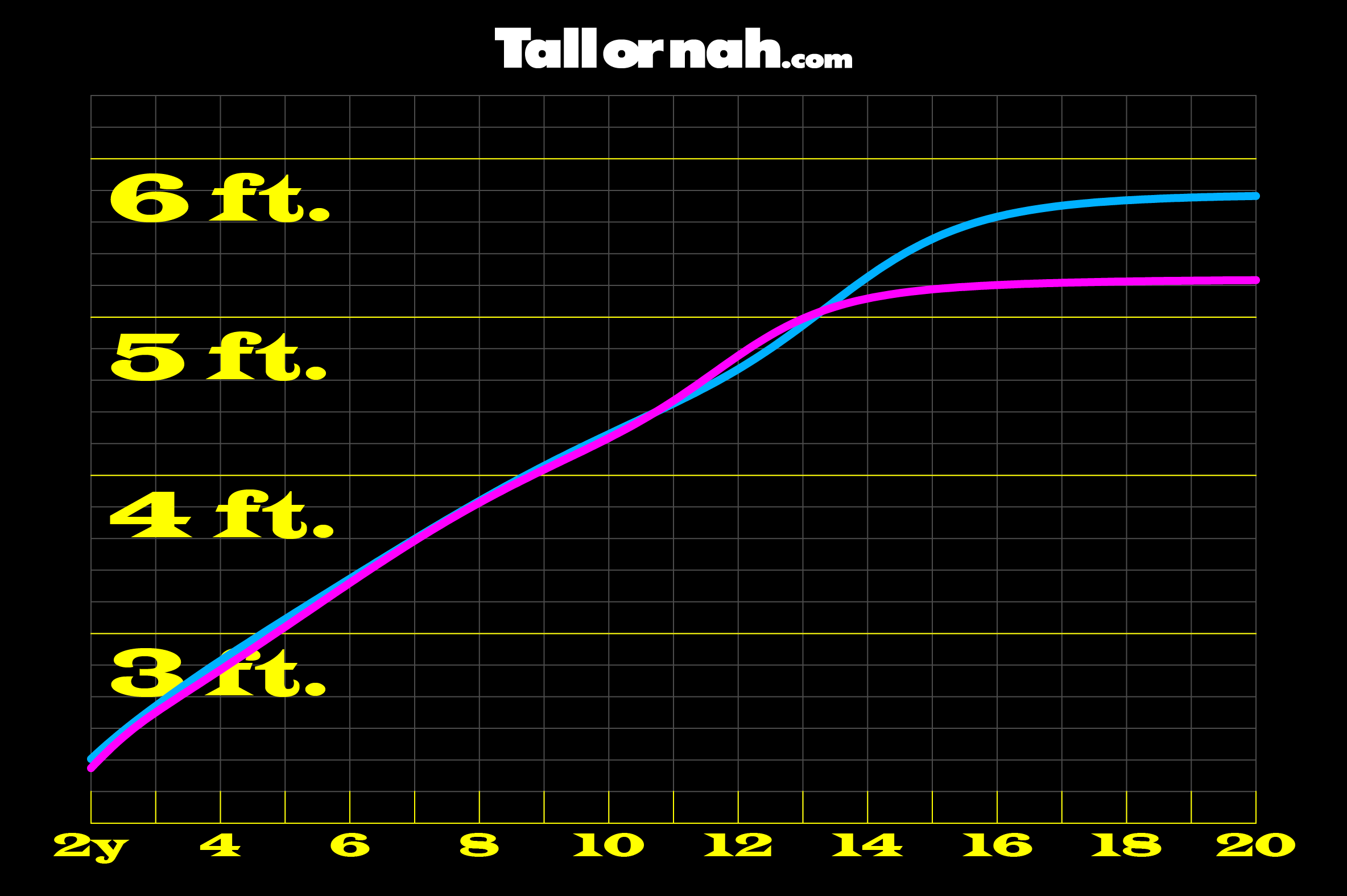 Figure 1: Median height of biological males and females in the United States (source: National Center for Health Statistics)
The graph in Figure 1 is the median height of biological males and females in the United States from the age of 2 to 20 (males in blue, females in magenta)—tap or click on it for a bigger view. Each line, therefore, represents the 50th height percentile of their sex. That is, half of males are above the blue line and half are below it, and half of females are above the magenta line and half are below it.
Notice that the shape of both growth curves is essentially the same. Males and females both experience the same number of bumps in the same sequence. But notice the timing of the curves, and how much quicker females begin their growth spurts and then level off into their end heights.
Also notice the period around the age of 12 when females are taller than males, which is the only time this will be the case. And finally, notice how quickly males rebound from being overtaken in height, and how much longer their heights continue to increase into adulthood.
Determining Height Potential
Mid-parental height formula
When you were born, the most reliable way to determine your height potential was to use the mid-parental height formula. The mid-parental height formula simply averages your parents’ heights and makes a small adjustment for biological sex. It is a rudimentary equation that makes a number of key assumptions, and should not be relied on long after birth.
Percentile tracking
By early childhood, a more accurate—and far more sophisticated—method emerges: percentile tracking. By the middle of childhood, percentile tracking will be the most accurate way to predict height potential all the way up to adulthood.
Percentile tracking works by taking your current height percentile—the percentage of people your age and biological sex you're taller than—and determining the height of adults in that same percentile whose heights are no longer increasing.
For example, if you're 13 years and 6 months old right now standing 5 feet and 6 inches tall, you're taller than 82% of all males who are also 13 years and 6 months old. Therefore, to predict your height potential, we simply look at the height of adult men who are taller than 82% of other adult men, which is 6 feet—and that is your height potential.
Percentile tracking works because height percentiles tend to remain fairly consistent over time. By the mid-to-late teenage years, most of the variation in growth patterns has already played out, and the height percentile begins to behave more like a constant than a variable. This characteristic can make the accuracy of percentile-tracking predictions remarkably high.
The result produced by percentile tracking is the median of your height potential—the middle value in your range of height possibilities. You may be wondering how wide that range of possibilities is, and it primarily depends on your age when the prediction is made. When percentile tracking first becomes a reliable predictor, at around the age of 2, the range of possible heights is thought to be plus or minus 2 inches from the median. When you are close to adulthood, however, that range can be plus or minus a few millimeters.
Calculating your height potential
Now let's turn things up and calculate your height potential, using percentile tracking—the most accurate method readily available.
To do that, use the Tall or nah height calculator, which uses percentile tracking to make its height predictions. When you enter your info into Tall or nah, you will get back, in addition to your percentile, a "projected height", which—as you now know—is the median of your height potential.
The Tall or nah height prediction is made on U.S. population data, which means that if you ignore this guide but generally live in alignment with the average American lifestyle, your end height will likely be your Tall or nah projected height.
But if you take this guide to heart and fully commit—especially from an early age—you can unlock your max height, the upper limit of your height potential, and surpass all expectations. And put everyone on notice.
Key Environmental Factors
Now that you understand how height works and what your genetic height potential is, let's get to what you really came here for: the key environmental factors that realize that potential.
Optimizing these factors for as long as possible up to adulthood is how you will unlock your max height—the upper limit of this potential. Study them carefully. Incorporate them into your daily routine until they become second nature—until they become your default way of life. Not only will your height increase, but your longevity and quality of life as well.
The following factors are listed in a general order of importance. However, it cannot be overstated that they are all important in realizing height potential, and for the best results, you must optimize them all. And if you have any questions, consult a qualified healthcare professional.
Nutrition
Nutrition is number one on the list for a reason: your body can only grow as tall as the building materials you give it.
When you were born, breast milk was likely your main or only source of nutrition because it met your whole nutritional needs for energy, protein, carbohydrate, fat, vitamin, mineral, and fluid. Breast milk is rich in calcium and phosphorus, and high in vitamin A, vitamin C, and vitamin E—it's nature's growth formula.
After six months, breast milk is no longer sufficient in meeting your nutritional needs. You still need all the things that breast milk provides, but you need more. And a varied diet now becomes essential to meeting your new needs: vitamin D, iodine, iron, zinc, vitamin K, and the B vitamins. Vitamin D is particularly important, for bone development.
After the age of 2, you'll begin to settle into your "regular diet". Fiber is a new essential, for regulating intestinal function and slowing the absorption of carbohydrates and fats, helping to prevent obesity—a genuine height killer. This is why it's healthier to eat the whole apple than it is just to drink its juice. And because you still have a growth spurt coming, you will need even more calcium, iron, zinc and folate than usual. In fact, this is the phase of life with the greatest need for calcium.
Knowing all of this, what does the max-height diet look like? The max-height diet is three things:
- Strong macronutrient baseline: Your diet must include all of the macronutrients—proteins, carbohydrates, fats, and fluids. You must not leave any out—avoid diets that restrict or limit any of them.
- Strong micronutrient baseline: Your diet must include all of the micronutrients—vitamins and minerals. You must eat a diet with a variety of whole foods to prevent deficiencies in any one thing.
- Optimized for bone development: With strong baselines in place, turn up the intake on the following: protein, calcium, vitamin D, zinc, iron, and folate.
This is the recipe for max height.
- Protein's richest sources (in order):
- Chicken
- Beans
- Fish
- Pork
- Peanuts
- Turkey
- Some cheeses
- Some seeds
- Soybeans
- Deer
- Beef
- Some nuts
- Lamb
- Veal
- Eggs
- Milk
- Some yogurts
- Some cereals
- Calcium's richest sources (in order):
- Yogurt
- Calcium-fortified orange juice
- Mozzarella cheese
- Sardines
- Milk
- Calcium-fortified soy milk
- Tofu
- Salmon
- Cottage cheese
- Soybeans
- Calcium-fortified breakfast cereals
- Spinach
- Turnips
- Kale
- Chia seeds
- Bok choi
- Pinto beans
- Corn tortillas
- Sour cream
- Whole wheat bread
- Vitamin D's richest sources (in order):
- Sunlight
- Cod liver oil
- Trout
- Salmon
- White mushrooms
- Vitamin-D fortified milk
- Vitamin-D fortified plant-based milk
- Vitamin-D fortified cereals
- Sardines
- Eggs
- Beef liver
- Tuna
- Zinc's richest sources (in order):
- Oysters
- Beef
- Blue crab
- Zinc-fortified breakfast cereals
- Oats
- Pumpkin seeds
- Pork
- Turkey
- Cheddar cheese
- Shrimp
- Lentils
- Sardines
- Greek yogurt
- Milk
- Peanuts
- Brown rice
- Eggs
- Kidney beans
- Whole wheat bread
- Salmon
- Iron's richest sources (in order):
- Iron-fortified breakfast cereals
- Oysters
- White beans
- Beef liver
- Lentils
- Spinach
- Tofu
- Dark chocolate
- Kidney beans
- Sardines
- Chickpeas
- Tomatoes
- Beef
- Potatoes
- Cashews
- Green peas
- Chicken
- White rice
- Whole wheat bread
- White bread
- Folate's richest sources (in order):
- Beef liver
- Spinach
- Black-eyed peas
- Foalte-fortified breakfast cereals
- White rice
- Asparagus
- Brussels sprouts
- Spaghetti
- Romaine lettuce
- Avocado
- Spinach
- Broccoli
- Mustard greens
- White bread
- Green peas
- Kidney beans
- Wheat germ
- Tomato juice
- Dungeness crab
- Orange juice
As for calories, during periods of rapid growth—like childhood and adolescence—your body needs them more than ever. If you don’t get enough, your body will begin to pull energy away from things like height increase because it's not an essential function—as much as you may disagree.
How many calories you need is hard to say, because age, biological sex, body weight, activity level, and growth rate are all factors to consider. The key is to give yourself enough energy to support your daily activity, without consistently under-eating. Pay attention to hunger cues and energy levels, and even your body's composition.
The last thing we must discuss is the anthropogenic—or man-made—dangers in food. And there are plenty, and they can be severe. And they have the potential to rob you of your height. These dangers are synthetic additives, artificial preservatives, pesticides, herbicides, plastics, and processing and packaging chemicals. Learn how to read nutritional labels. Learn how to identify hidden dangers. Eat organic as much as possible. Use your best judgment and do your research.
TLDR: Eat a clean, diverse whole-food diet that is balanced in proteins, carbohydrates, fats, and fluids—that especially emphasizes protein, calcium, vitamin D, zinc, iron, and folate.
Can a vegan diet stunt my growth?
The vegan diet does not inherently stunt growth, provided nutritional needs are fully met. The challenge with the vegan diet is meeting those nutritional needs. A diet that excludes foods of animal origin—including milk and eggs—introduces some nutritional gaps, namely vitamin B12. The vegan diet can also make it harder to get vitamin D, omega-3, and even calcium without relying on supplements or artificially-fortified foods. But if you can ensure that your nutritional needs are met eating vegan, your max height is still in reach.
What if I can't find or afford organic?
If you can't find or afford organic whole foods, choose non-organic options that have the lowest levels of pesticide contamination, and avoid those with the highest.
The following is a list of whole foods sold in the United States with the least amount of pesticide contamination (as of 2025) in order starting with the least contaminated. Consider focusing on these in non-organic form:
- Pineapples—lowest pesticide residue by weight
- Sweet corn—second lowest
- Avocados—third lowest
- Papaya
- Onion
- Sweet peas
- Asparagus
- Cabbage
- Watermelon
- Cauliflower
- Bananas
- Mangoes
- Carrots
- Mushrooms
- Kiwi
The following is a list of whole foods sold in the United States with the most amount of pesticide contamination (as of 2025) in order starting with the most contaminated. Consider avoiding or limiting these in non-organic form:
- Spinach—highest pesticide residue by weight
- Strawberries—second highest
- Kale, collard, mustard greens—third highest
- Grapes
- Peaches
- Cherries
- Nectarines
- Pears
- Apples
- Blackberries
- Blueberries
- Potatoes
Reference: "Protein", United States Department of Agriculture, https://www.nal.usda.gov/sites/default/files/page-files/Protein.pdf
Reference: "Calcium - Health Professional Fact Sheet", National Institutes of Health, https://ods.od.nih.gov/factsheets/Calcium-HealthProfessional/
Reference: "Vitamin D - Health Professional Fact Sheet", National Institutes of Health, https://ods.od.nih.gov/factsheets/VitaminD-HealthProfessional/
Reference: "Zinc - Health Professional Fact Sheet", National Institutes of Health, https://ods.od.nih.gov/factsheets/Zinc-HealthProfessional/
Reference: "Iron - Health Professional Fact Sheet", National Institutes of Health, https://ods.od.nih.gov/factsheets/Iron-HealthProfessional/
Reference: "Folate - Health Professional Fact Sheet", National Institutes of Health, https://ods.od.nih.gov/factsheets/Folate-HealthProfessional/
Reference: Savarino, Corsello A., Corsello G.: "Macronutrient balance and micronutrient amounts through growth and development", Italian Journal of Pediatrics, https://ijponline.biomedcentral.com/articles/10.1186/s13052-021-01061-0
Reference: Heaney, Weaver: "Newer Perspectives on Calcium Nutrition and Bone Quality", Journal of the American College of Nutrition, https://www.tandfonline.com/doi/abs/10.1080/07315724.2005.10719506
Reference: Mangels: "Height of Vegan Children", The Vegetarian Resource Group, https://www.vrg.org/blog/2024/06/21/height-of-vegan-children/
Reference: "EWG's 2025 Shopper's Guide to Pesticides in Produce | Full List", Environmental Working Group, https://www.ewg.org/foodnews/full-list.php
Hydration
Because hydration is such an important aspect of nutrition, it's been given its own spot on the list.
Water is the single most critical nutrient for life—without it, survival is measured in days. About 60% of your body weight is water, and it’s everywhere—inside your cells, between your cells, in your blood, in your saliva. And every vital process in your body depends on it, including the ones that increase height—for nutrient transport, hormone circulation, and the repair of tissue.
You get water not just from the glass you drink but from almost everything you eat. Most beverages contribute to your daily intake, and many foods, especially fruits and vegetables, contain significant amounts of water. Still, the best sources remain pure drinking water—especially naturally enriched spring water—and whole foods with a high water content.
How much you should drink depends on your age, body weight, activity level, and environment. The consensus is around 6–8 glasses per day for the average person, but that number is certainly contested in the medical-science community. Stay properly hydrated, however much you drink. Listen to your body, and drink when you’re thirsty and stop when you’ve had enough.
Be warned that it is possible to over-hydrate, which, in rare cases, can result in dangerously low levels of sodium in the blood. And it is certainly possible to under-hydrate, which can not only rob you of nutrients—and height—but put you in danger.
TLDR: Stay properly hydrated. Drink when you’re thirsty and stop when you’ve had enough—careful not to over-hydrate or under-hydrate.
Reference: Jéquier, Constant : "Water as an essential nutrient: the physiological basis of hydration", European Journal of Clinical Nutrition, https://www.nature.com/articles/ejcn2009111
Reference: Valtin, Gorman: ""Drink at least eight glasses of water a day." Really? Is there scientific evidence for "8 × 8"?", American Journal of Physiology, https://journals.physiology.org/doi/full/10.1152/ajpregu.00365.2002
Sleep
After nutrition, sleep is the second-most important environmental factor for height because it is when the highest amounts of growth hormone are released into your body.
Sleep can be divided into four stages. The first stage is the transition from wakefulness to sleep. The second stage is when your body settles in—body temperature drops, breathing slows. The third stage is the deepest and most restorative stage of sleep—also known as slow-wave sleep. And the final stage is when brain activity spikes and dreaming takes place.
Completing all four stages is a full sleep cycle. And over the course of a typical night, you complete several sleep cycles—usually between four and six.
Of these four stages, it is the third—slow-wave sleep—that is the most important for maximizing height. Because it is during these hours when growth hormone is released into your body in its highest amounts. Growth hormone—which you secrete from early childhood until late adulthood—is directly responsible for stimulating bone growth.
Remember, height increase is ultimately the lengthening of bone, and for that to happen, the body must have sufficient growth hormone. Therefore, you must prioritize sleep to reach max height.
That means treating sleep as a non-negotiable. Plan your evenings in advance so you don’t end up cutting into sleep with late-night distractions. Set a consistent bedtime and stick to it, even on weekends. If you play video games, stream shows, or scroll on your phone, cut it off at least an hour before bed to give your brain time to wind down. Build a routine that signals to your body it’s time to rest. The more consistently you protect your sleep, the more slow-wave cycles you’ll complete each night, and the more growth hormone your body will release.
TLDR: Prioritize consistent and quality sleep so that you enter slow-wave sleep throughout the night—when your body releases the most growth hormone.
Does napping count toward sleep?
Naps can reduce stress, improve recovery, and support overall health, which can all indirectly increase your height. But they can’t make up for poor sleep. When compared to slow-wave sleep, naps fall significantly short in how much growth hormone is released. Definitely, however, use naps as a tool to maintain your overall health, especially when your body is desperate for rest, but don't rely on them for hormone-driven growth.
Reference: Van Cauter, Plat: "Physiology of growth hormone secretion during sleep", The Journal of Pediatrics, https://www.jpeds.com/article/S0022-3476(96)70008-2/
Reference: Patel, Reddy, Shumway, Araujo: "Physiology, Sleep Stages", National Library of Medicine, https://www.ncbi.nlm.nih.gov/books/NBK526132/
Hormone balance
Hormones are the linchpin to height. Genetics determine your height potential and key environmental factors—that are largely in your control, like nutrition and sleep—realize that potential. But it all hinges on your hormones. If your body isn't producing the right ones in the right amounts, growth plate activity will suffer. Therefore, what this guide is ultimately trying to do is turn your body into the optimal hormone factory. That is the game.
The most popular hormone in this guide is growth hormone—no surprise there. But there are other hormones at play beyond growth hormone that are important for height increase. There is insulin-like growth factor-1 (IGF-1), which is growth hormone's primary mediator, which plays a major role in metabolism and growth. There are sex hormones, like testosterone and estrogen, that play critical roles in growth plate maturation. There are thyroid hormones, like T3 and T4, that are essential for metabolism—that growth plates rely on. There is cortisol, a stress hormone, that can suppress growth hormone and negatively impact bone health.
Beyond the principles outlined in this guide, the single best thing you can do to optimize your hormonal balance is to avoid hormone disruptors. The following are some of the most common hormone disruptors that you should avoid:
- Obesity
- Alcohol
- Nicotine
- Food pesticides
- Phthalates
- Steroids
- Performance-enhancing drugs (PEDs)
- Excessive sugar
- Ultra-processed foods
- Environmental toxins
- Chronic stress
Some of the biggest saboteurs, like alcohol, ultra-processed foods, and steroids, are obvious. Others, like food pesticides, phthalates, and chronic stress, are harder to see. The key is learning how to spot them—reading nutrition labels, researching ingredients you don’t recognize, questioning what’s in the products you use every day. Each bit of awareness adds up and stacks the odds in your favor.
TLDR: Avoid hormone disruptors—obesity, alcohol, nicotine, food pesticides, phthalates, steroids, performance-enhancing drugs (PEDs), excessive sugar, ultra-processed foods, environmental toxins, and chronic stress—because height increase ultimately rests on the natural balance of hormones.
Reference: Hubble: "Hormonal Influence on Growth", British Medical Journal, https://pmc.ncbi.nlm.nih.gov/articles/PMC1974571/
Reference: Murray, Clayton: "Endocrine Control of Growth", American Journal of Medical Genetics, https://onlinelibrary.wiley.com/doi/abs/10.1002/j.1552-4876.2013.31357.x
Immune health
A strong immune system can act as a safety net for height growth. Frequent illness can rob you of your height because infections divert the body's resources away from growing toward defending. And if your immune system is weak, you'll be sick more often, and for longer durations.
There aren’t any hacks that will dramatically boost your immune system overnight—building it up is a process, and so is maintaining it. Fortunately, that process is largely outlined here. If you commit yourself to this guide, you will strengthen your immune system as a consequence.
That said, there are specific things you can do to improve your immune system. First and foremost, maintain sufficient levels of vitamin D. There is a list of micronutrients that your immune system relies on, but vitamin D in particular is of unique importance because of the critical role it plays in immune function. A diet rich in probiotics has also been shown to boost immunity. Simple habits like washing your hands regularly and maintaining good dental hygiene also help. Controlled breathing techniques—like in the Wim Hof method—have been shown to enhance the body’s ability to fight infection.
TLDR: Get plenty of vitamin D on top of a micronutrient-rich diet, practice good hygiene, and do controlled breathing exercises to boost your immune system so your body can fully devote resources to height increase and not infection fighting.
Reference: Hedges, Berrett, Erickson, Brown, Gale: "Association between infection burden and adult height", Economics & Human Biology, https://pubmed.ncbi.nlm.nih.gov/28926748/
Reference: Delves, Roitt: "The Immune System", The New England Journal of Medicine, https://www.nejm.org/doi/abs/10.1056/NEJM200007063430107
Physical activity
Exercise—whether it's playing sports, working out, or doing something physically demanding—is the second most powerful way, after slow-wave sleep, to release growth hormone into your body. And the load and intensity of that physical activity largely dictate how much growth hormone your body releases.
Evidence shows that high-intensity exercises, like sprinting, can uniquely elevate the release of growth hormone. One study found that sprinting strongly stimulated growth hormone, with longer or faster sprints producing higher peaks—repeated sprints or short-term sprint training were less effective.
Additionally, weight-bearing exercises—including sports, including long-distance walking and running—put mechanical stress on your bones, which signals your body to build additional bone tissue, leading to stronger, denser bone material.
Exercise does not need to be intense, however, to optimize height increase. Regular exercise improves circulation, ensuring that growth plates get adequate nutrition. Regular exercise lowers cortisol, the stress hormone that inhibits growth hormone. Regular exercise improves sleep quality—the most effective way to release growth hormone. And regular exercise improves overall health so your body can devote resources to height increase and not other things like combating obesity or fighting infections.
And you don’t need a gym membership to reap these benefits. Calisthenics paired with long-distance walking and high-intensity sprinting are not only more than enough, they may even be the superior workout. Whatever you decide to do, work your way up slowly and listen to your body when it tells you to slow down or stop.
TLDR: Exercise is the second most powerful way to release growth hormone—with higher load and intensity exercises releasing the most. Regular exercise also promotes slow-wave sleep—the first most powerful way to release growth hormone.
Can lifting weights stunt my growth?
When done properly, lifting weights will not stunt your growth—it will add to your growth. There is no evidence that weight training inhibits the lengthening of bones. However, lifting weights can be risky when done improperly, which can lead to lost height potential—and this is likely where the myth originated.
Improper weight training—using poor form or loads that are too heavy—can put excess stress on the spine and growth plates. If growth plates are injured—through compression, fracture, or chronic strain—they can heal in ways that may slow or prematurely stunt growth in that bone. Injuries to the spine can be even more significant: in addition to growth plate damage, severe stress on the back can compress the discs between vertebrae or affect posture, which in turn may limit height.
Reference: Mirtz, Chandler, Eyers: "The Effects of Physical Activity on the Epiphyseal Growth Plates: A Review of the Literature on Normal Physiology and Clinical Implications", National Library of Medicine, https://pmc.ncbi.nlm.nih.gov/articles/PMC3194019/
Reference: Malina: "Weight Training in Youth-Growth, Maturation, and Safety: An Evidence-Based Review", Clinical Journal of Sport Medicine, https://journals.lww.com/cjsportsmed/abstract/2006/11000/weight_training_in_youth_growth,_maturation,_and.5.aspx
Reference: Stokes, Nevill, Cherry, Lakomy, Hall: "Effect of 6 weeks of sprint training on growth hormone responses to sprinting", European Journal of Applied Physiology, https://link.springer.com/article/10.1007/s00421-003-1038-5
Stress management
Stress is one of life's most lethal and hidden dangers and can wreak havoc on your endocrine system—responsible for producing and regulating hormones—which can significantly suppress your body's release of growth hormone. Stress is so powerful that it alone can stunt a person's growth during development.
Stress can be divided into two categories: acute or chronic. Acute stress is short lived. Chronic stress is constant.
Your body is designed to handle acute stress well. When it's not very often and when it's properly handled, acute stress can even be a net positive for your health, because of its ability to build strength and resilience. But chronic stress is never good for your health. Chronic stress is a height killer.
Stress—acute or chronic—can lead to changes in the serum level of many hormones, including growth hormone. In acute scenarios, this is not much of a concern, because things will quickly go back to normal when the stress is gone. In chronic scenarios, however, these prolonged changes to hormone balance toward survival mode can cause endocrine disorders, which is a major concern. Chronic stress can ultimately lead to a long and serious list of health problems, of which unrealized height potential is just the beginning.
Pay close attention to the stress in your life because it's not always so obvious, especially when it's chronic and has become familiar. Build a supportive social environment by leaning into positive relationships and avoiding toxic ones. Share your feelings openly with trusted people. Incorporate daily practices that promote calm, such as meditation, listening to music, spending quiet time at night, or engaging in activities you genuinely enjoy.
TLDR: Chronic stress alone can stunt your growth by suppressing growth hormone, so watch closely for stress that lingers and doesn’t let up and manage it appropriately.
Reference: Sävendahl: "The Effect of Acute and Chronic Stress on Growth", Science Signaling, https://www.science.org/doi/abs/10.1126/scisignal.2003484
Reference: Murray, Clayton: "Endocrine Control of Growth", American Journal of Medical Genetics, https://onlinelibrary.wiley.com/doi/abs/10.1002/j.1552-4876.2013.31357.x
Sunlight
We've talked a lot about vitamin D in this guide, and how vital it is for height increase. Vitamin D plays a direct role in bone growth and mineralization through the regulation of calcium and phosphorus metabolism. Without enough vitamin D, your body can’t absorb these minerals effectively, which ultimately limits bone development.
What many people don't know is that sunlight is where you get the majority of your vitamin D. While vitamin D can come from both diet and sun exposure, few foods naturally contain it in meaningful amounts. The majority of your vitamin D is synthesized in your skin when it’s exposed to sunlight—the warm, hugging embrace of Mother Nature.
What's also interesting is that vitamin D isn't even technically a vitamin, despite its name. "Vitamin D" is actually a prohormone. Vitamins, by definition, are organic compounds that the body needs but can't produce on its own. But vitamin D is something that the body does produce—through exposure to sunlight.
How much sunlight you need isn’t a simple answer. Factors like geographic location, time of year, time of day, skin color, and age all affect how much vitamin D your skin can produce from sunlight. For some people, ten minutes of midday sun may be enough a few times a week; others may need much more. There is also a debate in the medical-science community around how much vitamin D is even considered sufficient.
What's more, over the past few decades, the sunscreen industry and dermatology societies have strongly encouraged people to avoid unprotected sun exposure. This may partly explain why some studies believe that more than half of the world’s population is vitamin-D deficient. While it’s true that too much sun exposure and sun burning can increase the risk of non-melanoma skin cancers and wrinkling, there is little evidence that sensible sun exposure over the course of a lifetime—enough to promote adequate levels of vitamin D—significantly increases those risks.
A practical approach to sun exposure is using a vitamin D calculator to identify the best times of day where you live for optimal exposure. Aim for enough sunlight to stimulate vitamin D production, but be careful not to burn. And don't worry about overdosing, because once you’ve made enough vitamin D from sunlight, your skin’s production process naturally shuts off. As it turns out, sunlight doesn't just make plants grow taller.
If you do increase your sun exposure, eat foods rich in lycopene. Lycopene is a naturally occurring antioxidant that has been linked to skin repair from sun damage. Lycopene is most commonly found in foods that are red and pink in color—like tomatoes, watermelon, and pink grapefruit. Usually, the more red these foods are, the higher their lycopene content.
TLDR: Do not avoid direct sun exposure because sunlight, not food, is your primary source of vitamin D—which is critical for bone development.
What can I do when the sun isn't out?
When sunlight isn’t an option, focus on dietary sources of vitamin D. The major sources of dietary vitamin D come from oily fish, like trout and salmon. Cod liver oil is one of the richest sources. If you aren't a fan of fish or are concerned about mercury exposure, look to everyday foods that are fortified with vitamin D, like milks, breakfast cereals, juices, and yogurts. Learn how to read nutritional labels so you can look for foods with plenty of vitamin D.
Reference: Baggerly, Cuomo, French, Garland, Gorham, +9: "Sunlight and Vitamin D: Necessary for Public Health", Journal of the American College of Nutrition, https://www.tandfonline.com/doi/full/10.1080/07315724.2015.1039866
Reference: Gilchrest: "Sun exposure and vitamin D sufficiency", The American Journal of Clinical Nutrition, https://pubmed.ncbi.nlm.nih.gov/18689404/
Conclusion
Strategy
To make the most of this guide, approach it with the right mindset and execution plan. Keep these strategies in mind:
- Consistency beats intensity: The habits you repeat daily matter far more than occasional bursts of effort.
- Start small: Ease into new habits instead of trying to overhaul your lifestyle overnight to prevent burnout.
- Fundamentals first: Prioritize the key drivers—nutrition, sleep, and movement—before worrying about fine-tuning smaller details.
- Track your progress: Whether it’s logging sleep, meals, or workouts, tracking helps you stay accountable and spot what’s working.
- Stay patient and realistic: Results won’t come overnight, but steady commitment over months and years leads to meaningful progress.
- Adapt as you go: Life changes, and so will your routine. Flexibility ensures you can stick with your strategy long-term.
Puberty
There isn't anything special that you can do during puberty to maximize your height. Reaching max height is a marathon from infancy to adulthood, not a sprint during puberty. If you've been slacking on the fundamentals up until now—poor nutrition, inadequate sleep, limited exercise—puberty is the perfect time to correct course. And if you've been hitting the fundamentals up until now, puberty is the perfect time for fine-tuning.
Playing catch up
Lastly, if you're playing "catch up", don't worry. Height doesn’t increase at the same pace for everyone. Your growth is influenced by many things, including the timing of puberty. If your growth spurt hasn’t started yet, that doesn’t mean it won’t. In fact, late growth spurts are fairly common. The truth is, nobody can say for sure how your height will play out, except time.
Final words
Reaching your maximum height isn’t about chasing perfection—it’s about giving your body every chance to become what it was meant to become. Growth is the sum of small, consistent choices stacked over time. Every night of deep sleep, every nutrient-rich meal, every moment you choose movement over stagnation is a brick laid in the foundation of your growth.
When you look back, you won’t just measure your progress in inches, but in the discipline, resilience, and self-respect you built along the way. Your future height is the result of choices made today—make them count.